NOTE PER LA CONSULTAZIONE

NOTE PER LA CONSULTAZIONE:
Per leggere, scorrete la pagina verso il basso: il blog è come una rivista che va "srotolata" anziché sfogliarla. La grafica è ottimizzata per gli schermi dei computer; se leggete da un telefono o tablet, vi consigliamo di tenerlo in posizione "orizzontale".
Per la ricerca di artisti, temi e luoghi usate la casella Cerca nel Blog oppure l'Indice Alfabetico sul lato destro della pagina, visibile scorrendo un poco verso il basso.
Per contattarci: Rita Castigli rita.castigli@gmail.com - Aurelio Stoppini aureliostoppini@libero.it

mercoledì 15 agosto 2018

Metafisica al frantoio

Dipinti e sculture di Silvano D'Orsi all'oleificio Stante e Luciani di Fossacesia


Frantoio Stante e Luciani Fossacesia


Da oltre dieci anni i proprietari dello storico frantoio abruzzese non si limitano alla meticolosa cura dell'eccellenza dei prodotti ma vogliono promuovere la conoscenza di quella che è l'altra grande e ineguagliabile eccellenza del nostro paese, cioè l'arte. In questo agosto 2018, nell'ambito della rassegna "Castelli in Arte", stanno ospitando un'ampia collezione di opere del Maestro Silvano D'Orsi, che comprende un esauriente campionario della sua produzione attuale e alcuni esempi di opere precedenti; la mostra è stata curata da Pippo Cosenza e presentata dallo stesso Cosenza con Rita Castigli.

Silvano D'Orsi

Uomo del Sud, di Gioia Sannitica, discendente di quella popolazione italica che importava opere d'arte dalla Grecia e dalla Magna Grecia, ha ereditato quella perfezione innata del segno, quella magia di bellezza che gli intellettuali della fine del '600, anche dopo geni indiscussi come Leonardo e Raffaello, Michelangelo e Caravaggio, ritenevano tale che mai si era raggiunta nuovamente quella naturale perfezione di umanità divinizzata, quella sintesi che sembrava scritta nel cielo, con le forme delle nuvole, con i rivoli dei ruscelli, con le trine dei fiori e delle foglie. La stessa magia ha il segno di Silvano D'Orsi, ma la bellezza non basterebbe a spiegare il fascino che esso suscita.


Le sue opere di oltre 40 anni fa sono già sicure e dense di significato, ma la prima che mi sono trovata a studiare è un dipinto murale a Mugnano (PG) del 1983: due donne che hanno già un'intrigante combinazione di astrazione e sensualità, combinazione così difficile che ancora caratterizza le donne di D'Orsi. Dicendo "donne" non tengo conto della loro evoluzione successiva: hanno perso la testa sostituita da grandi elegantissimi cappelli. Così quei corpi sinuosi, gambe lunghissime e seni turgidi sono tremendamente attraenti ma anche ambigui. In realtà non dipingere o scolpire i visi è anche il modo di non caratterizzare come individualità riconoscibili i personaggi. Così essi diventano ognuno e chiunque, ciascuno di noi, pirandellianamente identificati da abiti e maschere. La metafisica assenza dell'individuo si veste di bellezza.

Silvano D'Orsi

Si è parlato molto di ironia per i quadri e sculture del Maestro, ma io colgo dietro alla riflessione ironica sul culto dell'apparenza nella società contemporanea, un senso di struggimento, di anelito ad un'integrità perduta. Ma posseduta mai davvero? Forse il ruolo dell'arte è sempre stato quello di costruire quell'identità e armonia che l'umanità ha intravisto e desiderato ma alle quali si è sentita vicina solo in momenti speciali. L'arte di D'Orsi, attraverso la grazia implacabile delle forme, crea questi momenti ma contemporaneamente ne svela l'inganno.
Un elemento ricorrente sono le maschere, volti perfetti da teatro greco, a volte indossate dai suoi pigri Pulcinella, stanchi forse di tarantellare a vuoto, o appoggiate a terra con il nastrino a ghirigoro. Mettono in guardia dalle illusioni ma con un sorriso che stempera il messaggio con grazia.

Silvano D'Orsi

Silvano lavora per temi che approfondisce e sui quali elabora magnifiche varianti: le moto, i fiori, le famiglie, le metafisiche, le attese, le coppie. In ordine di tempo l'ultima filtra le scene attraverso una tessitura raffinatissima di grigi sfumati d'argento e immersi in una foschia dorata preziosissima; le scene richiamano fotografie di altri tempi, elaborate ai sali d'argento, o la tavolozza lucente e iridescente del Guido Reni maturo nel cosiddetto periodo argenteo. Infatti l'arte di Silvano si inserisce con diritto nella storia dell'arte, ne è una colta erede che non ricorre a citazioni ruffiane né a subdoli calchi. La sua originalità si nutre di cultura, di storia e di studio assiduo senza sfoggi pedanti.


Silvano D'Orsi

Silvano D'Orsi

Le sculture in bronzo addensano lo spazio sulle loro superfici lucide e articolate dove il ricco panneggio viene creato e sospinto da un vento immaginario a evidenziare le forme eleganti e dinamiche delle figure femminili.


I gruppi raccolti dentro una grande vasca da bagno sottolineano dietro l'apparente giocosità quanto in realtà il mondo stia diventando troppo piccolo. Un remo appoggiato da una parte fa credere all'illusione di poterci navigare, quasi la vasca fosse una barca, comunque inadeguata per stare a galla. Una scacchiera inserita nello scafo sottolinea l'elemento di gioco nella vita senza il quale però si affonderebbe. Ognuno si tiene stretti i suoi giocattoli o feticci paludandosi di un'eleganza che l'esiguità dello spazio comunque contraddice. Sembra una riflessione sulla precarietà della condizione umana che cerca di nascondere ai propri occhi dietro le sue convenzioni la realtà vera del suo essere. Forse vi si può leggere un invito alla solidarità umana e alla sincerità.
Saper esprimere un giudizio di valore così problematico in forme di irresistibile bellezza è la magia dei quadri e delle sculture di Silvano D'Orsi.


Silvano D'Orsi

Il fiscolo dipinto da Pippo Cosenza esprime il senso profondo dell'iniziativa del frantoio Stante e Luciani, trasformando uno strumento di lavoro in un'opera d'arte nella quale fasci di colore creano illusori lampi di luce sui cerchi dell'antica fibra che sembrano ruotare come i solchi di un disco musicale o forse disegnano una mappa stellare.


Altre informazioni e immagini di opere si trovano nel sito web dell'artista: https://www.silvanodorsi.it/

La mostra resta aperta fino al 19 agosto 2018. Di seguito, prima della traduzione inglese dell'articolo, abbiamo inserito una carrellata di immagini dell'evento.

Silvano D'Orsi

Silvano D'Orsi e Rita Castigli


Silvano D'Orsi

Silvano D'Orsi

Silvano D'Orsi

Silvano D'Orsi con Mattia Stante


Rita Castigli con un'opera di Silvano D'Orsi

Silvano D'Orsi

Stante e Luciani

Silvano D'Orsi

Silvano D'Orsi

Stante e Luciani

Rita Castigli con Nicola Priori e Pippo Cosenza

Silvano D'Orsi

Fossacesia

Stante e Luciani


* * *
 
Metaphysics at the olive press

Paintings and sculptures by Silvano D'Orsi at the Stante and Luciani ancient mill in Fossacesia

For over ten years the owners of the historic Abruzzo mill have not been contented only with the meticulous care of the excellence of their products, but have promoted the knowledge of the other great and incomparable excellence of our country, that is Art. In  August 2018, as part of the "Castelli in Arte" exhibition, they are hosting a large collection of works by Maestro Silvano D'Orsi, which includes a comprehensive sample of his current production and some examples of previous works; the exhibition is curated by Pippo Cosenza and presented by him with Rita Castigli.

Man from the South, from Gioia Sannitica, descendant of that Italic population who imported works of art from Greece and Magna Graecia, he inherited that innate perfection of  sign, that magic of beauty that the intellectuals of the late 1600s, even after undisputed geniuses like Leonardo and Raphael, Michelangelo and Caravaggio, believed so that the natural perfection of divinized humanity had never been reached again, that synthesis that seemed written in the sky, by shapes of  clouds, by streams of water, by laces of flowers and of leaves. The same magic is in the style of Silvano D'Orsi, but beauty would not suffice to explain the charm that it arouses.
His works of 40 years ago are already recognisably his. The first one I have studied is a mural painting in Mugnano (PG) of 1983: two women who already have an intriguing combination of abstraction and sensuality , a difficult combination that still characterizes the women of D'Orsi. When I say "women" I do not take account of their subsequent evolution: they have lost their heads and replaced them by large elegant hats. So those sinuous bodies, long legs and turgid breasts are tremendously attractive but also ambiguous. Not actually painting or sculpting faces is also the way of not creating  recognisable individualities. So they become each and everyone, each of us, only identified by clothes and masks. The metaphysical absence of the individual is dressed in beauty.
There has been much talk of irony for D'Orsi's paintings and sculptures, but I feel, behind the ironic reflection on the cult of appearance in contemporary society, a sense of yearning, of yearning for lost integrity. But ever really possessed? Perhaps the role of art has always been to build that identity and harmony that humanity has always glimpsed and desired but felt close only in special moments. D'Orsi's art, through the implacable grace of shapes, creates those moments but at the same time reveals their deception.
A recurrent element is the presence of masks, perfect faces from the Greek theatre, sometimes worn by a lazy Pulcinella, tired perhaps of jumping for nothing, or placed on the ground with their curled ribbons. They warn against illusions but with a smile that smoothes the message gracefully.
Silvano works on themes that he deepens and on which he elaborates magnificent variations: motorcycles, flowers, families, metaphysics, expectations, couples. In order of time, his latest scenes are filtered through a refined texture of silver gray and immersed in a very precious golden mist; the canvases recall photographs of other times, elaborated with silver salts, or the bright and iridescent palette of Guido Reni in the so-called silver period. In fact D'Orsi's art fits in the history of art, he is a cultured heir who does not use quotations nor subtle casts. His originality is nourished by culture, history and assiduous study without pedantic flaunts.
The bronze sculptures fill the space around them by their shiny and articulated surfaces where the rich drapery is pushed by an imaginary wind to highlight the elegant and dynamic shapes of the female figures.
Groups of people gathered in a large bathtub underline the apparent playfulness of a human condition of precariousness. An oar leaning on one side makes believe the illusion of being able to navigate, as though the tub was a boat, however too small to stay afloat. A chessboard inserted into the hull emphasizes the element of game in life without which it would sink. Everyone keeps his toys or fetishes tight, holding on to an elegance that the smallness of the space contradicts. The scene seems a reflection on the precariousness of human beings who try to hide
the true reality behind conventions. Perhaps you can feel an invitation to human solidarity and sincerity.
The magic of Silvano D'Orsi's paintings and sculptures is able to express a deep and problematic judgment of value in forms of irresistible beauty.

Silvano D'Orsi

Silvano D'Orsi

Silvano D'Orsi

Silvano D'Orsi

Silvano D'Orsi


domenica 1 luglio 2018

Il Palazzo e il Pozzo

Giuseppe Fioroni tra presente, passato e sogni


Giuseppe Fioroni

Per raccontare la lunga carriera di questo artista occorrerebbero molte ore e libri ponderosi. 
Mi limiterò qui ad accennare alle sue mostre ospitate da sedi di altissimo prestigio a Washington, Potsdam, Madrid e Londra oltre che in Italia; citerò soltanto quella del 2014 a Palazzo Medici Riccardi a Firenze e quella appena conclusa nella Sala Vasariana del palazzo della Cancelleria Apostolica Vaticana a Roma, alla quale si riferiscono le immagini della prima parte di questo articolo.

Della sua pittura hanno parlato grandi nomi della critica d'arte come Vittorio Sgarbi e Philippe Daverio, e invitiamo tutti ad accedere al sito web dell'artista per conoscere la sua ricchissima bibliografia, o a sfogliare i suoi splendidi cataloghi.


Giuseppe Fioroni
Giuseppe Fioroni con Philippe Daverio
Cancelleria Apostolica, Sala Vasariana
Giuseppe Fioroni

Perché tanto interesse e tanto amore? Ovviamente non può essere solo il fascino del personaggio che con la fisarmonica fa rivivere gustose tradizioni popolari umbre e anche celtiche, o la simpatia e la curiosità che Fioroni suscita dal primo incontro, o l'impressione che sia un mago, come scrive D'Averio. 
Sono proprio le sue opere che accolgono gioiosamente lo spettatore nel loro spazio emozionale, uno spazio esuberante e tenero che sa risvegliare in noi la meraviglia dell'infanzia. Personaggi affascinanti si fanno strada nel colore venendo incontro allo spettatore attraverso uno spazio denso di presenze misteriose e fluide. Il loro movimento è dall'invisibile al visibile, dal passato al presente, dal sogno alla realtà, ma senza mai varcarne la soglia. Ne restano sempre al di là, come trattenuti dalle trame del colore, trame anche di storie, di racconti, di poesie.
Fioroni è fedele a un linguaggio che è comprensibile e insieme complesso, pieno di affettività e di rimandi alle favole e al circo dove la fantasia spazia e gioca, dove tutto è familiare e insieme sorprendente.


 Giuseppe Fioroni
  
Giuseppe Fioroni

Giuseppe Fioroni

Giuseppe Fioroni


Giuseppe FioroniGiuseppe Fioroni

 Giuseppe FioroniGiuseppe Fioroni

Giuseppe Fioroni


Se nei lavori su tela colpisce l'avventura e la libertà del colore che si addensa a dare apparente concretezza alle figure e che poi intorno si allarga in trasparenze come vapori e nuvole, nelle ceramiche l'espressività di Fioroni agisce sui volumi, tanto che nei piatti e nelle formelle li evidenzia con tratti che incidono la superficie.
La Torre di Babele diventa la grande metafora del mondo di oggi, con la scala che in un crescendo di solitudine e di violenza la percorre verso la cima dove la ferita delle Torri Gemelle marca l'orrore cui si può giungere.
I Presepi raccontano la storia della Nascita nelle lingue più varie ma sempre fresca e commovente. Nei piatti la bizzarria giocosa di Fioroni trova un altro campo di espressione originale ed estroso.

Giuseppe Fioroni
 
Giuseppe FioroniGiuseppe Fioroni

Giuseppe Fioroni
(Foto Paolo Ficola)
Giuseppe Fioroni
(Foto Paolo Ficola)


A conclusione di questa prima parte, vorrei citare i due grandi critici che ho menzionato all'inizio: secondo Vittorio Sgarbi Fioroni “è al confine tra reale e irreale, storia e metastoria, dipinto e ceramica, fra astrazione e figurazione. È in questo azzardo continuo, all'interno di una poesia che riscontra la magia nelle cose semplici, che va cercata la radice più autentica dell'arte di Giuseppe Fioroni”.
Philippe Daverio suggerisce che Fioroni riprende il corso della storia dell'arte dalla sospensione che la prima guerra mondiale aveva provocato, e lo avvicina a James Ensor e a Maurice de Vlaminck prima che “il fango delle trincee rendesse cupa la sua tavolozza”; lo accosta “agli arlecchini rosa del primo Picasso e agli svolazzi celesti di Marc Chagall”. 
Non si tratta certo di imitazione, ma del riscoprire una freschezza espressiva ricca di evocazioni e di vibrazioni che imprimono alle sue opere un denso e intenso valore poetico.

*   *   *


Giuseppe Fioroni a Mugnano

Ma Giuseppe Fioroni è noto anche per la generosità e l'amore per la sua terra.
Il suo più recente regalo è un'opera di grande fascino e poesia donata a Mugnano, il paese dei Muri Dipinti tra Perugia e il lago Trasimeno.
Sette formelle in ceramica si incastonano nel pozzo della Piazza del Castello al centro del paese, facendone un gioiello lucido e brillante. Nel realizzarle l'artista ha obbedito al sentimento di affetto che lo lega a Mugnano, paese da lui frequentato tanto tempo fa e del quale ricorda personaggi e amici cari.


Giuseppe FioroniGiuseppe Fioroni

Giuseppe Fioroni


Ogni formella è parte di un racconto che suona come un canto epico, alto, dove i personaggi sono protagonisti di una grande avventura spirituale e storica. Questo è vero per i cavalieri rappresentati, ma vale anche per gli artigiani e i contadini. C'è il richiamo a fatti reali ma questi sembrano sognati, prendono forme e colori che la fantasia ha trasformato e cosparso di magia, come nei dipinti medievali dove il mondo sensibile si sublima verso l'astrazione.
Cavalieri di Malta, Templari e monaci Benedettini richiamano la storia di Mugnano e le sue origini e ci proiettano nel mito e nel Medioevo. Il Medioevo è anche e soprattutto una dimensione dello spirito, la possibilità della verità del sogno, la fantasia che trasfigura la realtà. Nel percorrere i vicoli del paese si può sentire che ci sono quei personaggi che nei loro nobili costumi, come numi tutelari, vegliano da una distanza stellare e celeste sulla cinta muraria antica sette secoli e sulle sue torri belle e possenti.
L'arte di Fioroni realizza questa magia perché parla al cuore spingendo l'immaginazione a prendere il volo. Il tempo fermato nelle formelle riprende il suo cammino portando con sé quei valori e quei miti che diventano parte dell'oggi e ne illuminano il senso con richiami ancestrali.
Quella vera di pozzo, proprio come una vera nuziale, sposa due universi, passato e presente, realtà e fantasia, storia e mito, in una gioiosa armonia che l'arte di Fioroni sa creare.


*   *   * 

The Palace and the Well

Giuseppe Fioroni between present, past and dreams

To tell the long career of this artist would take many hours and ponderous books.
I will limit myself here to mentioning his exhibitions hosted by highly prestigious locations in Washington, Potsdam, Madrid and London as well as in Italy; I will mention only the one in 2014 at Palazzo Medici Riccardi in Florence and the one just concluded in the Sala Vasariana of the building of the Vatican Apostolic Chancery in Rome, to which the images of the first part of this article refer.
His works have been described by the great names of art critics such as Vittorio Sgarbi and Philippe Daverio, and we invite everyone to access the artist's website to learn about his rich bibliography, or to leaf through his splendid catalogs.
Why so much interest and so much love? Obviously it can not be just the charm of the character that with the accordion brings back to life tasty Umbrian and Celtic folk traditions, or the sympathy and curiosity that Fioroni raises from the first meeting, or the impression that he is a magician, as Daverio writes .
It is precisely his works that joyfully welcome the spectator in their emotional space, an exuberant and tender space that awakens in us the wonder of childhood. Fascinating characters make their way into color by coming to meet the viewer through a space full of mysterious and fluid presences. Their movement is from the invisible to the visible, from the past to the present, from dream to reality, but without ever crossing its threshold. They always remain beyond it, as if held back by the plots of color, also plots of stories, stories, poems.
Fioroni is faithful to a language that is comprehensible and at the same time complex, full of affection and references to fairy tales and the circus where fantasy spans and plays, where everything is familiar and at the same time surprising.
If in the works on canvas you are srticken by the adventure and the freedom of colours that thicken to give apparent concreteness to the figures and then spread in transparencies like vapor and clouds, in the ceramics the expressiveness of Fioroni acts on the volumes, so that in plates and in panels he highlights them with incisions that affect the surface.
The Tower of Babel becomes the great metaphor of today's world, with the ladder that in a crescendo of loneliness and violence travels it to the top where the wound of the Twin Towers marks the horror that can be reached.
The Cribs tell the story of the Birth in the most varied languages but always fresh and moving. In the dishes Fioroni's playful quirk finds another field of original and fanciful expression.
At the end of this first part, I would like to mention the two great critics I mentioned at the beginning: according to Vittorio Sgarbi, Fioroni " is on the border between real and unreal, history and metahistory, painting and ceramics, between abstraction and figuration. It is in this continuous gamble, within a poem that finds magic in simple things, that the most authentic root of the art of Giuseppe Fioroni should be sought ".
Philippe Daverio suggests that Fioroni takes up the course of art history from the suspension that the First World War had caused, and brings his work close to James Ensor and Maurice de Vlaminck before "the mud of the trenches darkened his palette"; he compares it "to the pink harlequins of the first Picasso and to the celestial flourishes of Marc Chagall".
It is certainly not an imitation, but a rediscovery of an expressive freshness rich in evocations and vibrations that give a dense and intense poetic value to his works.

But Giuseppe Fioroni is also known for his generosity and love for his land.
His most recent gift is a work of great charm and poetry donated to Mugnano, the Village of Painted Walls between Perugia and Lake Trasimeno.
Seven ceramic tiles are set in the well of the Piazza del Castello in the center of the village, making it a shiny and brilliant jewel. In creating them the artist obeyed the feeling of affection that binds him to Mugnano, a village he frequented a long time ago and of which he recalls dear personalities and friends.
Each tile is part of a story that sounds like an epic, high song, where the characters are protagonists of a great spiritual and historical adventure. This is true for the knights represented, but also applies to craftsmen and peasants. There is a reference to real facts but these seem to be dreamed, take shapes and colors that fantasy has transformed and sprinkled with magic, as in medieval paintings where the perceptible world is sublimated towards abstraction.
Knights of Malta, Templars and Benedictine monks recall the history of Mugnano and its origins and project us into myth and the Middle Ages. The Middle Ages are also and above all a dimension of the spirit, the possibility of the truth of dream, fantasy that transfigures reality. As you walk through the narrow streets of the village you can feel that there are those characters who, in their noble costumes, like guardian gods, watch from a stellar and celestial distance on the ancient city walls of seven centuries and on its beautiful and mighty towers.
The art of Fioroni realizes this magic because it speaks to the heart pushing the imagination to take flight. The time stopped in the tiles resumes its journey bringing with it those values ​​and myths that become part of the present and illuminate its meaning with ancestral references.
That true of well, just like a real wedding ring, marries two universes, past and present, reality and fantasy, history and myth, in a joyful harmony that the art of Fioroni can create.


Giuseppe Fioroni a Mugnano

sabato 3 marzo 2018

Il foco, le nuvole e i fanghi

Visioni poetiche di Fausto Minestrini


Fausto Minestrini


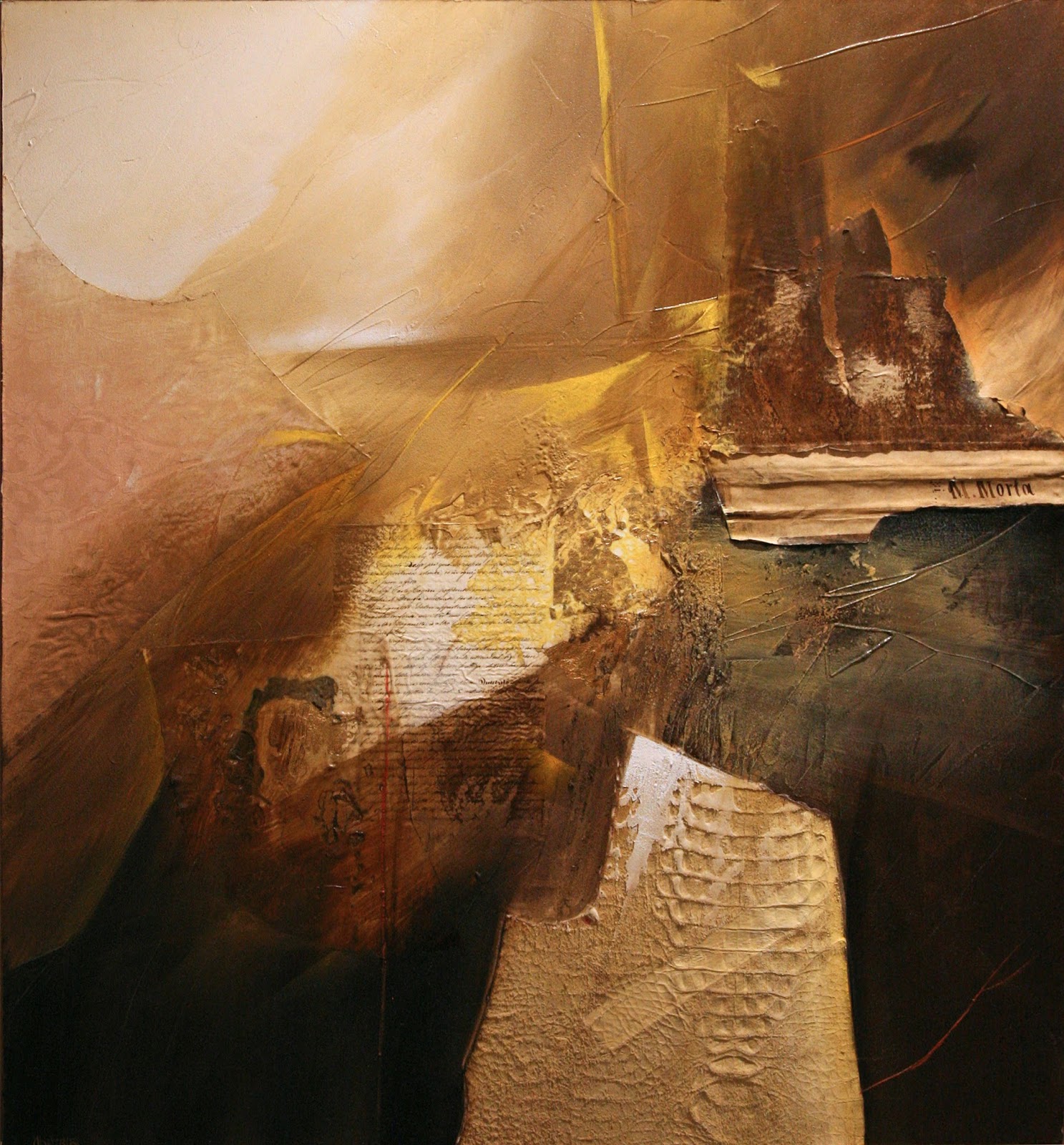
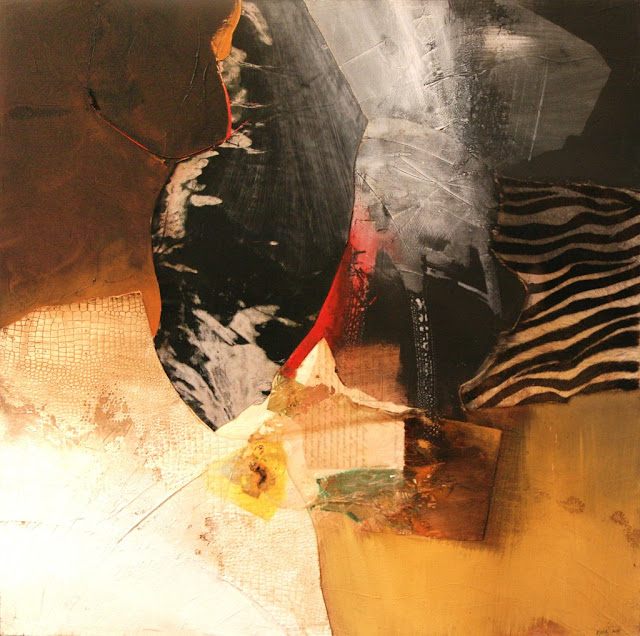
Tanto tempo fa Fausto Minestrini dipingeva paesaggi con maestria e grazia, e incontrava il favore del pubblico vendendo alla grande. Ma un giorno incontrò Burri e questi gli chiese se non si annoiava... Così iniziò il suo percorso informale ed ogni suo quadro è stato un'avventura, un viaggio fatto con curiosità e sospinto da passione costante. La sua ricerca nuova e libera si è espressa in cicli di approfondimento instancabile da un lato di tecniche e materiali, dall'altro di temi. Anche se Fausto riconosce un debito di gratitudine a Burri e a De Gregorio, suo caro e compianto amico, la sua strada è totalmente originale.  Fausto cerca sempre nuove vie, come uno scalatore, e le percorre con grande rigore, ma anche con gioia infantile e direi quasi incoscienza.

Mette anima mediterranea in una concezione americana dell'arte informale che lui supera con un romanticismo di fondo che gli fa riversare sulla tela emozioni intense. Un dettaglio ricordato o presente, un merletto femminile, una rosa in boccio, una lettera antica danno l'avvio ad onde di emozioni colorate che investono la tela sovrapponendosi e infrangendosi, ma sempre creando armonia ed equilibrio.


Fausto Minestrini, Rita Castigli, Stefano Chiacchella

Fondamentale è il suo rapporto con la natura, suggeritrice sempre di colori e di forme, maestra di bellezza. Con lei c'è anche una intesa magica e,quasi stregone, Fausto coltiva fiori e piante antiche e officinali, vivendo le miracolose metamorfosi delle stagioni.
Il passato che continua a vivere nel presente dell' antico mulino, La Roscia, in cui vive crea il fondo fertile e intrigante delle sue opere. Alcuni critici hanno citato in proposito Leonardo e gli alchimisti:
...le machie de' muri, la cenere del foco, le nuvole e i fanghi che destano l'ingegno a nove inventioni.


Fausto Minestrini

E Fausto ne trae ispirazione anche grazie all'uso raffinatissimo e brillante della tecnica mista: inserzioni di carte antiche, oggetti evocativi, frammenti di sacco, scritte sottratte al loro contesto, metalli e vetri, superfici riflettenti, limature, terre e oro. Ogni elemento è manipolato dall'artista-faber perché solo attraverso il processo creativo prende significato e si carica di senso nel suo mondo visionario.
Nelle miniere di sogni e di ricordi l'oro trova significati molteplici, un tesoro prezioso da raggiugere che richiama le pratiche alchemiche come pure le combustioni che del passato gli permettono di esorcizzare l'indicibile.
Guardando le sue opere, dobbiamo avventurarci come Alice lasciandoci cadere nella cavità del tronco e accettando di abbandonare i nostri punti fermi, i riferimenti consueti, per affrontare un viaggio-scoperta. Come ad Alice vengono offerti biscottini e bottigliette, a noi vengono offerti indizi, tracce da seguire... Ma un'ambiguità sommessa s'insinua nella lettura dei quadri che sono sempre più complessi di quanto appare inizialmente.

Per esempio, in Passaje para tu corazon una chiave di antica foggia ci invita quasi rassicurandoci, ma troppe storie dolorose iniziarono con tanta semplicità...

Fausto Minestrini
Passaje para tu corazon
Fausto Minestrini
Per vederti meglio

Per vederti meglio cita la favola di Cappuccetto Rosso, espressione piena di amore da parte della nonna ma carica di minaccia da parte del lupo camuffato. E' una frase d'amore che richiama anche l'inquietudine  della famosa canzone dei Police: Every breath you take, I'll be watching you (Ti terrò d'occhio).
 

Fausto Minestrini
Vento tiepido

Fausto Minestrini
Tango

Così in Vento tiepido si richiama l'attimo fuggente della giovinezza e la musica lontana di Battisti.  
In Tango  una rosa ancora in boccio reca promesse mentre i colori si scatenano tra la passione e la violenza, un tuffo nell'ambiguità dei sentimenti primigeni.
Faro spento è il punto alto dal quale esplorare un mondo di nostalgia. E' spento ma la luce ancora viva dei ricordi aleggia intorno dolce e acre insieme.


Fausto Minestrini
Faro spento
Fausto Minestrini
Notte del serpente

Fausto Minestrini
Africa

Notte del serpente  ci immerge negli abissi dell'inconscio, liquide azzurrità piene di vitalità e di tranelli, mentre in Africa espode la fantasia infinita della natura nei suoi colori e disegni bizzarri: si aprono spazi d'infanzia e d'avventura, adrenalinici di paura e saturi di gridi e fruscii. Ma non è questo il mondo primitivo dentro di noi?

Tuono di luce esperimenta, come altre opere recenti, l'uso di luci interne all'opera stessa e il sentimento potente che le ispira trova ulteriore energia.
 

Fausto Minestrini

Fausto sintetizza la sua poetica con una frase semplice ma immensa: scrive che semplicemente cerca di dipingere il calore del sole, il colore del vento, il silenzio della luna.
 

Ma Fausto è anche generoso e ama tenere corsi ad aspiranti pittori per offrire loro le competenze tecniche necessarie perché possano esprimersi. I corsi, tenuti nel suo laboratorio (antro di Mago) sono amichevoli e pieni di allegria contagiosa. L'impegno è intenso ma gioioso.
Un'atmosfera di complicità, quasi di congiura, per arrivare lontano nella via della conoscenza e della bellezza.


Fausto Minestrini

Fausto Minestrini
Fausto Minestrini
Fausto Minestrini

Collegamento all'Album con tutte le foto della mostra e dell'atélier dell'Artista

Fire, Clouds and Mud

Fausto Minestrini's Poetic Visions

A long time ago Fausto Minestrini painted landscapes with skill and grace, and met the favor of the public by selling successfully. But one day he met Burri, who asked him if he was not bored ... 
So Fausto started his informal journey and every painting has been an adventure, a travel made with curiosity and driven by constant passion. His new and free research has been expressed in cycles of tireless research, on one hand on techniques and materials, and on the other on themes. Even if Fausto recognizes a debt of gratitude to Burri and De Gregorio, his dear and late friend, his path is totally original. Fausto always looks for new ways, like a climber, and runs them with great rigor, but also with childish joy and a sort of recklessness. 
He puts mediterranean soul in an american conception of informal art that he overcomes with a background of romanticism that makes him pour intense emotions onto the canvas. A remembered or present detail, a feminine lace, a bud rose, an ancient letter give rise to waves of colored emotions that invest the canvas overlapping and breaking, but always creating harmony and balance. 
Its relationship with nature is fundamental, always a suggestion of colors and shapes, a beauty teacher. With nature there is also a magical agreement and, almost a sorcerer, Fausto cultivates ancient and medicinal flowers and plants, living the miraculous metamorphosis of the seasons. 
The past that continues in the present of the ancient mill, La Roscia, in which he lives, creates the fertile and intriguing background of his works. Some critics have quoted Leonardo and the alchemists about it:... the stains on the walls, the ash of the fire, the clouds and the muds that arouse the talent to new inventions. 

And Fausto draws his inspiration also thanks to the refined and brilliant use of mixed techniques: insertions of ancient papers, evocative objects, sack fragments, writings subtracted from their context, metals and glass, reflecting surfaces, filings, sands and gold. Each element is manipulated by the artist-faber because it takes meaning only through the creative process and is charged with sense in his visionary world. 
In the mines of dreams and memories gold finds multiple meanings, a precious treasure to be reached that recalls alchemical practices as well as the combustions that allow him to exorcise the unspeakable of the past.
Looking at his works, we must venture like Alice letting ourselves fall into the trunk cavity and agreeing to abandon our fixed points, the usual references, to face a journey-discovery. As Alice is offered biscuits and bottles, we are offered clues, traces to follow... But a subdued ambiguity insinuates in the reading of the paintings that are always more complex than initially appears.

For example, in Passaje para tu corazon, an old-fashioned key invites us almost reassuringly, but too many painful stories began with such simplicity... 
To see you better cites the tale of Little Red Riding Hood, an expression full of love by her grandmother but full of threat from the camouflaged wolf. It is a phrase of love that also recalls the restlessness of the famous Police song: Every breath you take, I'll be watching you
Likewise in The lukewarm wind the fleeting moment of youth and the distant music of Lucio Battisti are recalled. In Tango a rose still in bloom brings promises while the colors are unleashed between passion and violence, a dip in the ambiguity of primitive feelings.
Off lighthouse is the high point from which to explore a world of nostalgia. It is off but the still vivid light of memories hovers around sweet and sour at one time. 
Night of the snake plunges us into the abysses of the unconscious, liquid azurness full of vitality and tricks, while in Africa the infinite fantasy of nature expires in its bizarre colors and designs: spaces of childhood and adventure, adrenaline of fear open up and saturated with shouts and rustles. But is this not the primitive world within us? 
Thunder of light experiences, like other recent works, the use of lights inside the work itself and the powerful feeling that inspires them finds further energy. 
Fausto summarizes his poetics with a simple but immense sentence: he writes that he simply tries to paint the heat of the sun, the color of the wind, the silence of the moon. 

But Fausto is also generous and likes to teach lessons to aspiring painters, to offer them the technical skills necessary to express themselves. The courses, held in his laboratory (Wizard's cave) are friendly and full of contagious happiness. The commitment is intense but joyous in an atmosphere of complicity, almost of conspiracy, to get far in the path of knowledge and beauty.